Sukuk issuance, from paper to one platform
Issuing sukuk, Shariah-compliant certificates often called Islamic bonds, relied on pen and paper, physical documents and bankers calling people one by one. Our engineers joined Emrgo's team to put every party on one platform.

The challenge
A sukuk issuance brings together the company raising funds, the arrangers who structure the deal, legal counsel, investors and regulators. Each party has its own role and permissions, and all of them work on the same deal.
There was no fixed scope: the product was being invented as it was built. The regulation was written for paper, which meant several rounds of rethinking core workflows. Saudi deployment rules also meant porting the platform from AWS to Oracle, and both versions had to keep working.
What we built
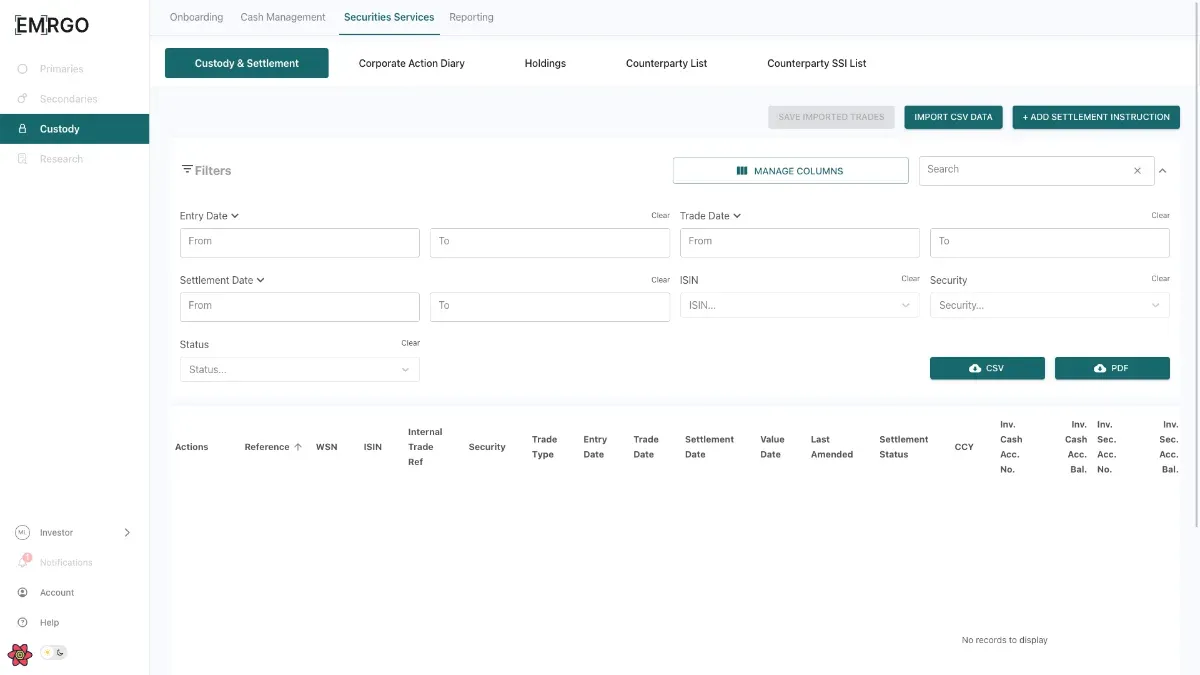
- Customer onboarding and identity checks (KYC).
- Sukuk creation, where the party raising funds (the obligor) starts an issuance.
- Arranger management, to bring in and coordinate the banks structuring the deal.
- Term sheets, with the commercial terms set on the platform.
- Digital contract signing, in place of physical signatures.
- Multi-language support, including English and Arabic with right-to-left layout.
How we worked
Emrgo already had an in-house engineering team and brought us in to add capacity. Our engineers joined it as one group: the work was never split into our part and theirs, and they picked up whatever the roadmap needed. As usage and complexity grew, the platform moved from JavaScript to Go for higher throughput and better concurrency.
Outcome
- Launched in five countries, from the MENA region to Pakistan
- Three years of continuous delivery through regulatory changes, product pivots and a platform migration